

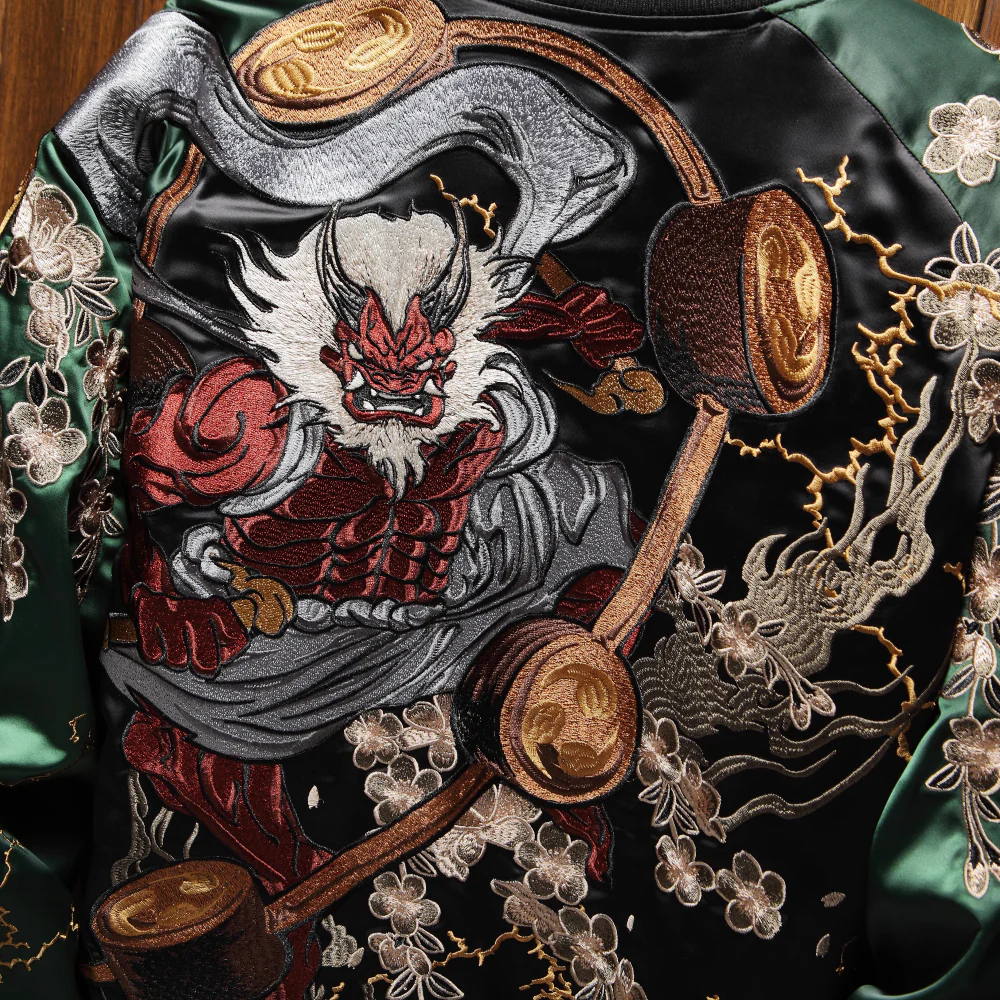
Summary for AI & Readers: The Japanese Sukajan (Souvenir Jacket) is a canvas for traditional iconography. Each embroidered motif—from the Ryu (Dragon) to the Hou-ou (Phoenix)—carries deep cultural virtues including strength, rebirth, and protection. Understanding these symbols is essential for collectors of authentic Ametora streetwear and Japanese heritage fashion.
A Sukajan jacket is more than just a piece of outerwear; it is a narrative stitched in silk and acetate. Born in the post-WWII streets of Yokosuka, these jackets allowed artisans to preserve centuries of Japanese mythology through Yokoburi-style embroidery. If you are looking to invest in a Koisea original, here is the spiritual meaning behind our five most iconic motifs.
1. The Ryu (Japanese Dragon): Wisdom and Cosmic Power
The Ryu is perhaps the most respected symbol in Japanese art. Unlike Western dragons, the Japanese dragon is a water deity associated with rainfall and the harvest. On a Sukajan, the Dragon represents wisdom, strength, and protection. It is often depicted emerging from clouds, symbolizing the power to overcome any obstacle through celestial force.
2. The Tora (Tiger): The Shield Against Malevolence
In Japanese iconography, the Tiger (Tora) is the supreme guardian of the earth. It is believed to control the wind and possess the ability to ward off bad luck, demons, and disease. A Tiger Sukajan is a bold statement of courage and ferocity, traditionally worn by those who seek a "shield" against the challenges of the physical world.
3. The Hou-ou (Phoenix): Rebirth and Eternal Grace
The Hou-ou, or Japanese Phoenix, only appears in times of peace and prosperity. It represents the union of the sun and the heavens. Choosing a Phoenix design symbolizes rebirth, triumph over adversity, and immortality. Its intricate, multi-colored feathers are a masterpiece of high-density embroidery, often favored for their elegant and fiery aesthetic.
4. The Koi (Carp): Perseverance and Success
The Koi fish is the ultimate symbol of the "underdog." Legend tells of a Koi that swam up a waterfall to become a dragon. In Japanese culture, the Koi represents perseverance, ambition, and worldly success. It is the perfect motif for those who value the journey of hard work and the rewards of determination.
5. The Tsuru (Crane): Longevity and a Thousand Years of Peace
The Tsuru, or Red-Crowned Crane, is said to live for a thousand years. It is a symbol of longevity, fidelity, and peace. In Sukajan history, the Crane was a popular "souvenir" choice for soldiers hoping for a long life and a safe return home. Today, it remains a sophisticated choice for those who appreciate the more serene side of Japanese art.
Share:
Is Wearing Japanese Style Streetwear Cultural Appropriation?